Summary
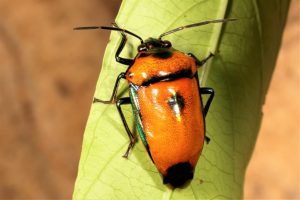
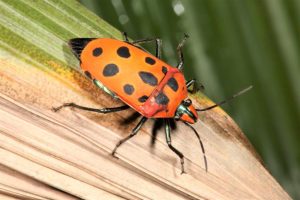
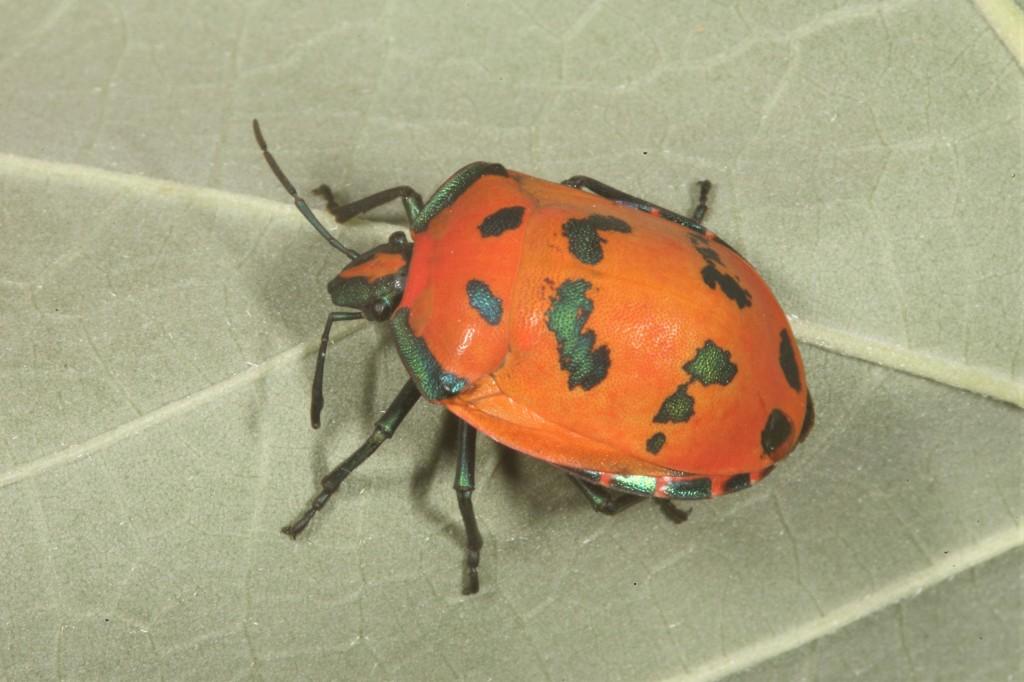
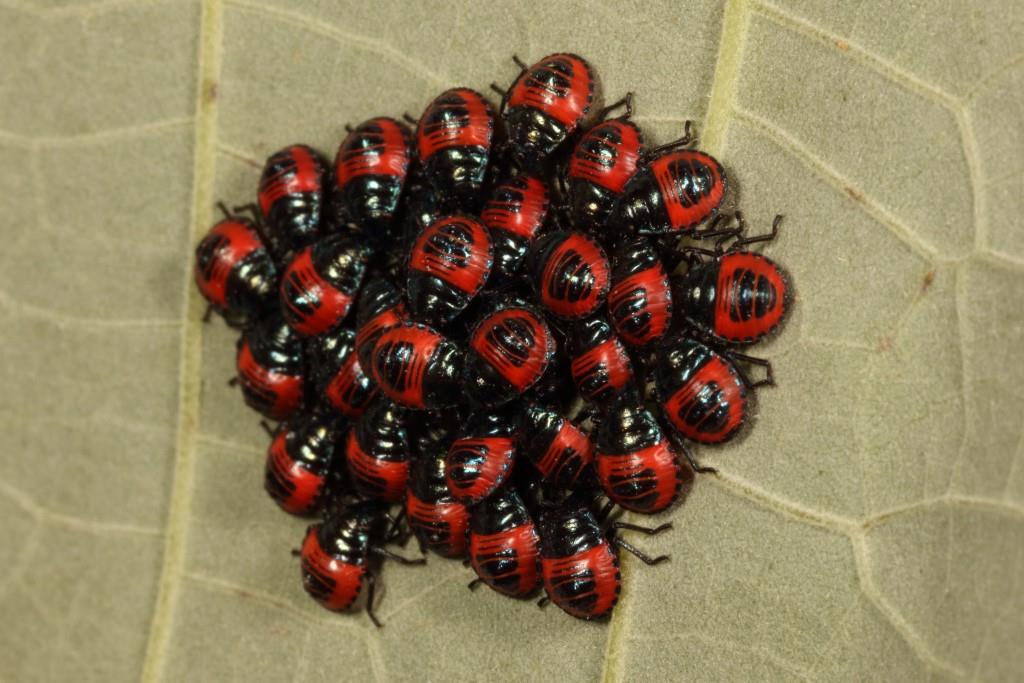
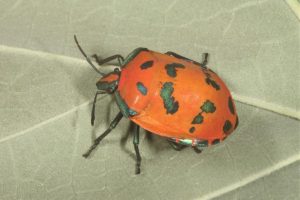
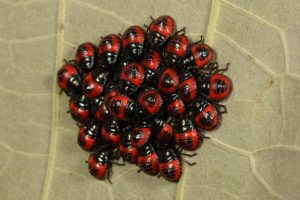
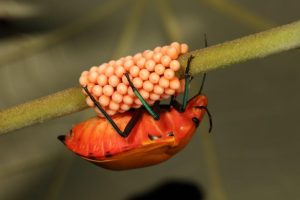
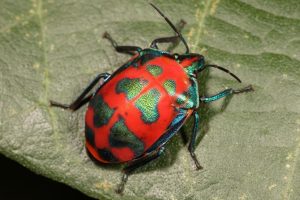
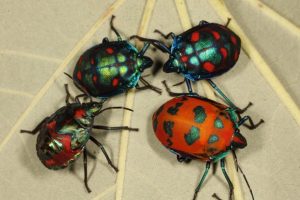
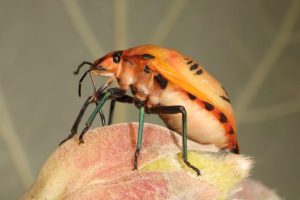
One of the best and brightest amongst many good and bright bugs in Australia. A true example to all other wannabe bugs.
Identifiying features
One of the best and brightest amongst many good and bright bugs in Australia. A true example to all other wannabe bugs.
Similar species
 ?>
?>
 ?>
?>
 ?>
?>
 ?>
?>
 ?>
?>
 ?>
?>
Other common names
- Common Test
Details
- Derivation
-
Arthro – jointed (Greek); pod – foot (Greek)
- Author
-
Gravenhorst, 1843
- Distinguishing features
-
Arthropods are distinguished by a segmented body enclosed in an exoskeleton composed of chitin and, when present, jointed appendages in pairs.
- Evolutionary history
-
Arthropods arose in the late Ediacaran period or possibly the early Cambrian, more than 500 million years ago. They most likely emerged from a group of segmented, worm-like creatures called lobopodians, which included the bizarre Hallucigenia.
Arthropods were variously thought to be polyphyletic (with several different origins), but with more recent use of molecular phylogenetics are now considered monophyletic (single origin). The same studies place arthropods in the Superphylum Ecdysozoa, along with nematodes and several other phyla including Velvetworms (Onychophora) and Water Bears (Tardigrada), based on their habit of growing by moulting (ecdysis). Other scientists group the arthropods, onychophorans and tardigrades together in the Superphylum Panarthropoda. Differences in the way the integument (outermost protective covering) hardened seems to have divided the groups Chelicerata and Mandibulata (see below) early on in their evolutionary history.
Within the Arthropoda, insects and crustaceans are now grouped together in the Clade Pancrustacea, alongside their closest sister-group Myriapoda (centipedes and millipedes), together making up the Mandibulata, followed by Chelicerata and the extinct Trilobites (although Myriapods are often assigned their own clade).
- External structure
-
The arthropod exoskeleton comprises three layers:
the outermost epicuticle, a thin layer of protein that produces waxes to prevent water loss in terrestrial species;
the exocuticle, a much thicker layer consisting of the polysaccharide chitin and proteins that are tanned to make the hard brown substance called sclerotin;
and the endocuticle, by far the thickest layer, composed again of chitin and proteins, but soft and flexible because the proteins are untanned.
In addition, groups such as crabs and barnacles fortify the exoskeleton by secreting calcium carbonate into the cuticle.
The exoskeleton
protects arthropods from attack by predators, parasites and pathogens;
protects terrestrial arthropods from desiccation;
allows insects to breathe via trachea;
and provides internal attachment for muscles.
It is divided into plates over the body and cylinders along the appendages, but around the joints it lacks the outer hardening layer (exocuticle) to provide flexibility for movement. In addition to the cylindrical appendages, the body of many arthropods is in the form of a hollow tube – both incredibly strong structures resistant to bending, twisting and compression.
The foregut and hindgut of all arthropods, and the tracheae of insects and book lungs of some spiders, are all ingrowths of the exoskeleton and must be shed with the rest of the exoskeleton during moulting.
The major disadvantage of the exoskeleton is that it cannot stretch and must be shed to allow for growth. Arthropods are at their most vulnerable during moulting, and as a consequence it usually takes place at night or in a secluded place. The second disadvantage is that the heavy exoskeleton is one of the factors that limits size – the largest arthropods live in the sea, as the saltwater helps support their weight.
- Body plan
-
Segmentation
The basic arthropod body plan is a series of segments ranging from 20 in insects and some crustaceans, to more than 100 in many centipedes. This plan seems to have evolved very early in their evolutionary history. In many groups these segments are fused or lost during embryonic development, or adapted for reproduction, feeding and locomotion. Segments are often grouped into larger functional units (called tagmata, or tagma as singular), such as the head, thorax and abdomen of insects. The head of insects, for example, is a rigid capsule comprising segments supporting appendages modified into various mouthparts (labrum, mandibles, maxillae and labium) and antennae.
The fusion of segments has several advantages:
different functions can be performed by separate segments (division of labour);
these functions can be increasingly specialised;
fewer legs reduce the chances that they interfere with each other during locomotion.
Appendages
In its basic form, each segment supports a pair of appendages, which may be lost when segments fuse. Appendages are composed of a base (protopod) which supports an inner limb branch (endopod) and outer limb branch (exopod), the latter often in the form of a flattened gill. This is known as a biramous limb and seems to be the ancestral form, arising from lobopodian ancestors in the Cambrian. Whilst biramous appendages are still common in crustaceans, other groups such as centipedes and millipedes, insects, spiders and scorpions possess uniramous appendages, where one limb branch is lost
At the head end, appendages may be modified for sensing food (maxillary palps), manipulating food (maxillipeds), crushing or chewing food (mandibles) or filtering food (cirri in barnacles), injecting venom (forcipules in centipedes and fangs in spiders) or as general sensory organs (eg antennae). Appendages around the middle of the body tend to be modified for walking, jumping, burrowing, seizing prey and swimming, and at the rear end swimming (especially in crustaceans) and reproduction.
Ancestral arthropods probably possessed legs with 11 segments, but most groups now have eight or fewer. Unlike other animal groups which may possess a ball-and-socket joint enabling limbs to move in any direction, arthropod legs generally articulate only through hinges which only move in one plane. They are able to move more freely because each individual joint moves in a different plane.
In most arthropods, the legs move alternately on each side of the body, in a wave from rear to front. So when the leg on one side of the body is pushing forward, the leg on the other side is in the recovery stroke. Walking movements are controlled by a network of neurons called Central Pattern Generators, but these movements can be modified by the brain to incorporate changes in weight load, changes in the substrate (particularly regarding grip), increasing or decreasing speed, starting, stopping and turning. Leg length may change along the body, or the distance between legs may be increased, to prevent one pair of legs interfering with the next, or using rules such that the next leg towards the front does not move until the leg behind has completed its movement. Interference is further reduced by using only some of the available legs – many crabs, for example, use only alternative pairs of legs when running, and insects may tuck up the first pair and run on the hind pairs. Speed and efficiency may also be increased by changing the gait (sequence of legs) during acceleration.
Because of the long bodies possessed by centipedes and millipedes, leg coordination appears to be somewhat decentralised, allowing local leg movements to adapt to changes in terrain without involving the brain. The direction of the wave of leg movement also changes with terrain, swapping from back-to-front to front-to-back with difficult terrain, which allows the front legs to get a solid grip before proceeding. Leg movement is also coordinated with waves moving down the body as it bends, the two waves moving into and out of sync to increase or decrease speed.